 NAPI 2027

The year was 2021, right in the middle of the COVID-19 pandemic. I first heard about the NAPI internship program from my professor at Ateneo, who had completed his doctoral studies at NAIST. At the time, my expectations for the future were modest at best: I assumed that after finishing my master’s degree, I would end up in a standard, low-paying corporate job in the Philippines—assuming I could even land a decent offer in such a brutal job market. Pursuing graduate studies abroad felt completely out of reach, reserved for applicants with far flashier credentials and competitive scholarships. Nonetheless, with nothing to lose, I submitted my NAPI application without giving it much thought.
Weeks passed, and graduate school coursework completely consumed my schedule. Because I wasn’t expecting much, I was genuinely surprised when I received my acceptance. I knew of other Ateneo alumni selected for the program whose resumes were far more impressive than mine, packed with international research exposure and competition awards. While it was unfortunate that travel restrictions prevented me from experiencing NAPI onsite in Japan, I actually owed my spot to the pandemic: because the program shifted online, the organizers were able to accept a larger cohort than the usual six interns. Had it been a normal year, my application likely wouldn’t have made the cut.
I was assigned to the Mathematical Informatics Laboratory, which coincidentally was my Ateneo professor’s alma mater lab. While I felt honored to work under Kazushi Ikeda-sensei, I was also anxious about whether I could keep up with the lab members’ technical depth. I didn’t want to become a burden—especially since my assigned topic, zero-suppressed binary decision diagrams (ZDDs), was completely foreign to me. Fortunately, the remote setup felt remarkably welcoming. Organizers and interns stayed connected on Discord to bond and share their experiences, while daily check-ins and progress reports with the lab created an open environment where I never hesitated to ask for feedback or guidance.
Treating those two weeks as a personal challenge, I read through every reference paper shared with me (most of them written in Japanese), learned the custom C++ library implementation, and eventually proposed a new algorithm for calculating network reliability measures. In retrospect, I had barely scratched the surface and was mostly figuring things out on the fly—yet that was precisely the magic of NAPI. Instead of being judged solely on a cold PDF resume, I had a direct line into the lab to demonstrate my curiosity and work ethic in real time. We wrapped up the program with a fun online kanpai on the final day, and before NAPI ended, Ikeda-sensei invited me to apply to his lab for my doctoral studies. Having that direct connection removed so many of the usual administrative barriers and made both my NAIST application and my application for the University-Recommended track of the MEXT scholarship far smoother than I ever imagined. Energized by that glimpse into research, I took the leap.
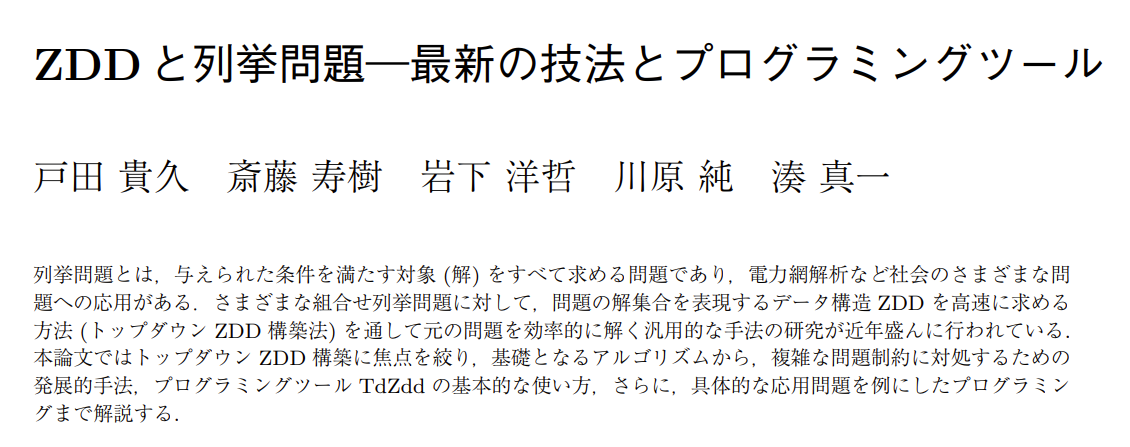
Fast forward to October 2022: after being selected for the MEXT scholarship, I officially began my PhD at NAIST. One of the best parts about NAIST’s doctoral program is that you dive straight into research from day one, supported by a bilingual English-and-Japanese environment and a large, diverse international student community that makes cultural exchange part of everyday life. For the first year and a half, I continued working on ZDDs. To be completely honest, those were the toughest and most intense months of my life. NAIST’s journal publication requirement hung over me constantly, compounded by repeated rejections from reviewers unfamiliar with such a niche topic—and a nagging worry on my part that spending my PhD on an “unmarketable” niche area might hurt my future job prospects. With the steady support of my family, friends, and labmates, my paper was finally accepted.
Clearing that milestone unlocked one of the biggest strengths of Ikeda-sensei’s lab and NAIST Information Science as a whole: genuine academic freedom and a culture that strongly encourages collaboration across colleagues. Free to broaden my horizons in the second half of my PhD, I pivoted toward more industry-relevant areas—most notably graph neural networks (GNNs)—while collaborating on projects spanning econometrics, Bayesian optimization, and causal discovery. Those experiences sharpened my research intuition, engineering skills, and ability to communicate complex ideas. Along the way, I had the privilege of presenting my work at conferences I never imagined attending:

International Conference on Mathematics and Statistics (ICoMS) 2023 in Germany, which marked my very first time in Europe;
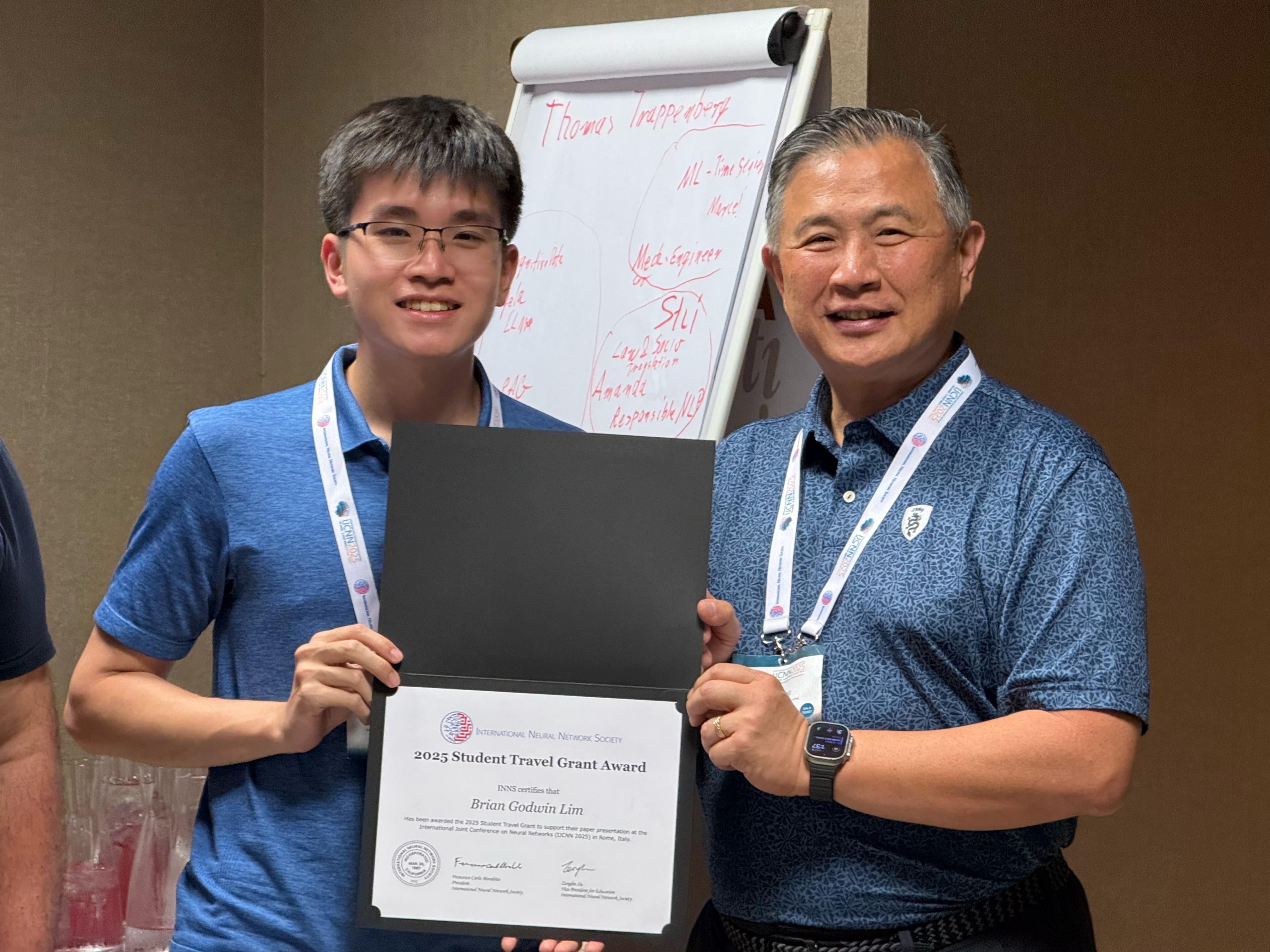

International Joint Conference on Neural Networks (IJCNN) 2025 in Italy, where I met and went on to collaborate with Dr. Irwin King from The Chinese University of Hong Kong (CUHK), a leading expert in GNNs; and

Japanese Conference on Mobility Management (JCOMM) 2025 in Sapporo alongside a lab colleague, where delivering a poster presentation in English at a predominantly Japanese venue proved to be a memorable challenge of its own. Moving to Japan also sparked a new hobby in photography, giving me a fun excuse to explore new cities and practice behind the lens between conference sessions.
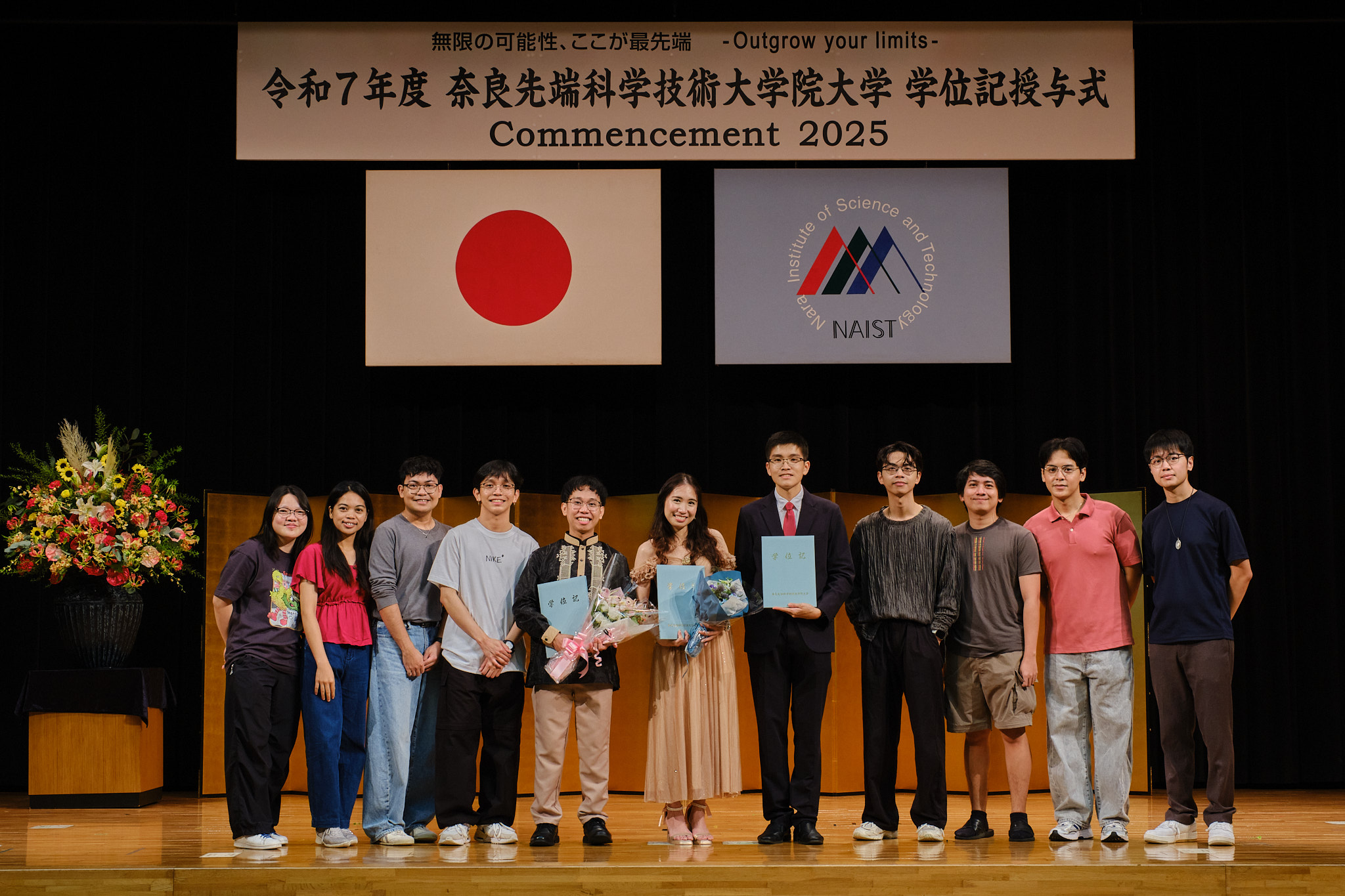
After three unforgettable years, I graduated from NAIST on time—only to step straight into unemployment. I had applied to several companies months before graduation, only to be met with rejection after rejection. Looking back, my biggest regret from my PhD was letting NAIST’s comfortable, English-friendly environment make me complacent about studying Japanese, which would have opened far more doors during my job hunt. Fortunately, Ikeda-sensei kindly offered me a postdoctoral position in the lab, giving me the stability to stay in Japan and buy time for my search.
During that brief postdoc stint, a recruiter reached out to me on LinkedIn about a role at Rakuten. I hesitated at first because Rakuten had already rejected me once before. Still, reminding myself I had nothing to lose, I decided to try again. This time, the recruiter was proactive—relentlessly following up after every stage and making sure my application documents and interview preparation were rock solid. A huge stroke of luck also worked in my favor: the opening sat right at the intersection of finance and AI, matching the exact breadth of skills I had built at Ateneo and NAIST almost to the letter. To my disbelief even today, I got the offer. The role strikes a rare balance between applied research and industry engineering, making every detour along the way worthwhile.

Sitting down to write this blog post and trace my journey backward is honestly a surreal, pinch-me moment. In 2021, I thought my ceiling was a modest corporate job in Manila just to ride out a pandemic economy. Never in my wildest dreams did I picture earning a MEXT-funded PhD in Japan, presenting research across Europe, collaborating with world-renowned professors, and landing an AI research role in Tokyo. None of those doors would have opened—or even seemed thinkable—without NAPI serving as my very first stepping stone.
If you are hesitating to apply for NAPI or NAIST because you feel your resume isn’t impressive enough, take the leap anyway! NAPI exists to give you a foot in the door that a piece of paper alone might never open—all you have to do is show up, embrace the unfamiliar, and make the most of every opportunity that follows!